Work Experience Certificate Format for International Job Applications
Work Experience Certificate Format for International Job Applications
You have found a job abroad that matches your skills, prepared your CV, and started the application. Then you reach a request for proof of work experience. Suddenly, you are wondering whether the short letter from your former employer is enough, whether it needs your salary, and who should sign it.
The uncertainty can be worse when you worked for a small business without a human resources department. Perhaps your former manager has left, the company has closed, or your certificate says little more than “worked with us satisfactorily.” You know you did the work, but you need a clear way to prove it.
This guide will help you understand what to include, adapt practical samples, request the document professionally, and avoid mistakes that create unnecessary questions. By the end, you will know how to prepare a certificate that accurately explains your experience and follows the instructions of the organisation receiving it.
- What Is a Work Experience Certificate?
- When Do You Need a Work Experience Certificate for International Applications?
- Essential Details in a Work Experience Certificate
- Work Experience Certificate Format You Can Adapt
- Completed Work Experience Certificate Sample
- Work Experience Certificate Wording for Current Employees and Promotions
- Writing Duties Clearly in a Work Experience Certificate
- Work Experience Certificate Requirements for Recruitment and Skills Assessments
- How to Request a Work Experience Certificate Professionally
- Work Experience Certificate Options When the Employer Cannot Help
- Work Experience Certificate Formatting and Submission Mistakes
- Work Experience Certificate FAQs
- Final Work Experience Certificate Checklist
What Is a Work Experience Certificate?
A work experience certificate is a document issued or authorised by an employer to confirm someone’s employment history. Depending on the organisation and purpose, it may also be called an experience letter, employment certificate, service certificate, or employment verification letter.
The name alone does not tell you whether the document is suitable. Its contents matter more. A letter confirming your job title and dates serves a different purpose from a detailed statement explaining your duties, working hours, and progression through several positions.
Think of your CV as your account of your career. The certificate gives the employer’s confirmation of the relevant facts. The two documents should agree, although the certificate does not need to repeat every achievement or skill listed on your CV.
It is also helpful to distinguish confirmation from recommendation. A recommendation letter may explain why a manager believes you would be a strong employee. A work experience certificate primarily establishes what work you did, where you did it, and when. Positive comments can be included when appropriate, but they should not replace the basic employment details.
When Do You Need a Work Experience Certificate for International Applications?
Follow the vacancy instructions first. An employer might request employment evidence during the initial application, after an interview, or while checking the background of a preferred candidate. Another may contact your referees directly instead of asking you to upload a certificate.
Do not assume that every overseas application requires this document. Equally, do not wait until the last day to request it if the application clearly asks for one. Former employers may need time to retrieve records and arrange an authorised signature.
For ordinary recruitment, the required reference can be quite brief. UK workplace advisory service Acas explains that a basic reference may confirm the job title and employment dates, while detailed references can cover additional experience and abilities.
This matters if you receive a short letter and worry that it looks unimpressive. Length alone does not determine usefulness. Ask whether it provides the information the recipient actually requested.
A separate process, such as a professional skills assessment or immigration application, may have its own evidence rules. Do not assume that a document accepted by a recruiter will satisfy another organisation reviewing your qualifications or work history.
Essential Details in a Work Experience Certificate
Start with the recipient’s checklist and compare it with the employer’s usual format. The table below is a practical drafting guide, not a universal legal standard.
| Detail | What to include | Why it helps |
|---|---|---|
| Employer identity | Organisation name, address, and relevant contact details | Identifies who is confirming the employment |
| Issue date | The actual date the letter is issued | Shows when the information was confirmed |
| Employee name | Full name consistent with employment records | Connects the document to the applicant |
| Position | Official job title and department where useful | Explains the role held |
| Employment dates | Accurate start and end dates, or current status | Establishes the employment period |
| Employment arrangement | Full-time, part-time, temporary, or other accurate description | Clarifies the working relationship |
| Responsibilities | Main duties, where requested | Shows what the work involved |
| Hours and remuneration | Include when the recipient requires them | Supports assessment of the claimed experience |
| Authorisation | Signer’s name, role, signature, and appropriate contact details | Allows the information to be verified |
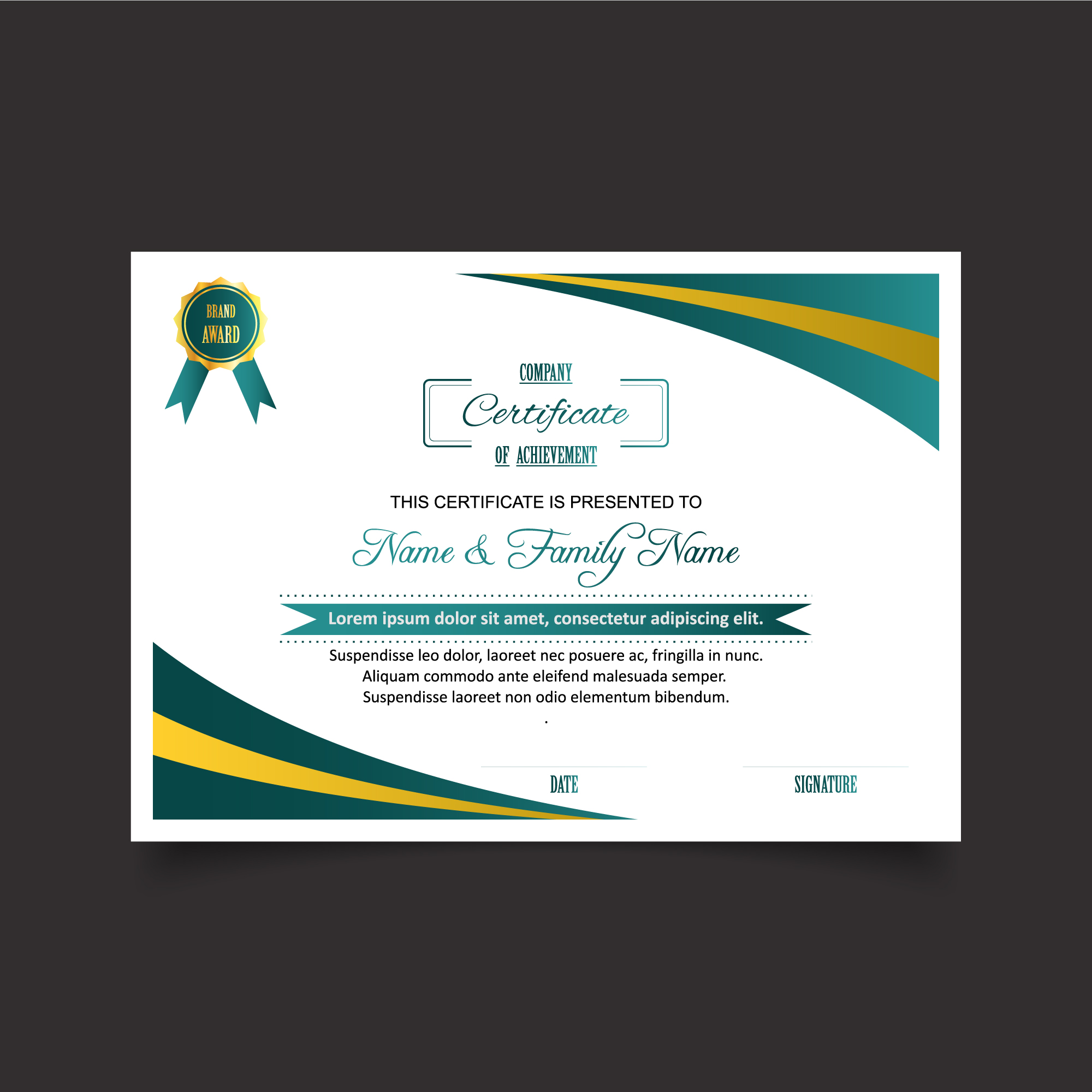
Use the employer’s official letterhead where available or required. A decorative border, oversized logo, or elaborate certificate design adds little if the underlying details are missing.
An employee number can help the organisation locate your records, but include it only when useful. Avoid adding unrelated personal information such as marital status, religion, family details, or bank account numbers to a general employment certificate.
For applicants in Nigeria, make international contact details easy to use. An employer’s telephone number should include the appropriate country code, and the address should identify the country clearly. These small choices reduce confusion for someone reviewing the letter overseas.
Work Experience Certificate Format You Can Adapt
The following template is a starting point for an employer to review. Replace every placeholder with accurate information, remove fields that do not apply, and add any details specifically required by the recipient.
[Official company letterhead]
Date: [Actual issue date]
Subject: Work Experience Certificate for [Employee’s Full Name]
To Whom It May Concern,
This letter confirms that [Employee’s Full Name] was employed by [Company Name] as [Official Job Title] in the [Department, if applicable] from [Start Date] to [End Date].
The employment was [full-time/part-time/other accurate arrangement], based in [City and Country, or accurate remote working arrangement]. [Include weekly working hours if required.]
The employee’s principal responsibilities included:
- [Actual responsibility one]
- [Actual responsibility two]
- [Actual responsibility three]
- [Actual responsibility four]
[If required: State remuneration accurately, including the currency, payment period, and whether the amount is gross or net.]
[Optional: Include a brief, supportable statement about performance or contribution, if permitted by company policy.]
This letter has been issued at the employee’s request to confirm the employment details above. For verification, please contact [Authorised Contact Name or Department] using [Official Contact Details].
Yours faithfully,
[Signature]
[Authorised Signer’s Full Name]
[Position]
[Company Name]
[Official Email Address]
[Telephone Number With Country Code]
[Company stamp, if applicable or required]
The employer must approve the final wording. Preparing a draft to make the process easier is different from issuing an employer’s certificate yourself. Do not add a signature, seal, or company branding without authorisation.
Completed Work Experience Certificate Sample
This fictional example shows how the format can work for an administrative position. The names, company, and employment details are illustrative and must not be submitted as evidence of real employment.
[Cedarbridge Office Services — Official Letterhead]
Date: 30 October 2026
Subject: Work Experience Certificate for Amara Okeke
To Whom It May Concern,
This letter confirms that Amara Okeke was employed by Cedarbridge Office Services, Enugu, Nigeria, as an Administrative Assistant from 10 January 2022 to 28 February 2025.
The position was full-time, with a regular working schedule of 40 hours per week.
Her principal responsibilities included:
- Maintaining electronic and paper records for office operations.
- Scheduling meetings and coordinating appointments for the management team.
- Preparing routine correspondence and updating administrative spreadsheets.
- Recording office supply requests and following up with approved suppliers.
- Receiving customer enquiries and directing them to the appropriate department.
This certificate is issued at her request to confirm her employment history. Further verification may be obtained from the undersigned through the company’s official contact details.
Yours faithfully,
[Authorised Signature]
Daniel Eze
Operations Manager
[Official Company Email]
[Company Telephone Number]
Notice that the sample explains the work without exaggerated praise. It also leaves salary out because this example is intended as a general employment confirmation. If the actual recipient requires salary or other information, the employer should add it before signing.
Work Experience Certificate Wording for Current Employees and Promotions
If you still work for the organisation, the letter should make that clear. There is no need to invent a leaving date or use wording that suggests your employment has ended.
An appropriate opening might read:
“This letter confirms that [Full Name] has been employed by [Company Name] as [Job Title] since [Start Date] and remains employed in this position as of [Issue Date].”
For a general letter, spelling out the month can prevent confusion between date conventions. “6 May 2024” is easier to interpret internationally than “06/05/2024.” However, use a specific numeric format if the recipient expressly requires it.
If you were promoted, separate the positions instead of making it appear that you held your final title throughout your employment. For example:
- Customer Support Assistant: 3 April 2021 to 31 July 2023.
- Customer Support Supervisor: 1 August 2023 to 30 September 2025.
Briefly describe the responsibilities associated with each position when relevant. This helps the reviewer understand the progression without overstating your years of supervisory experience.
Also check any changes in hours or employment arrangement. A period of part-time work followed by full-time employment should be represented accurately, especially where the recipient assesses the amount of experience gained.
Writing Duties Clearly in a Work Experience Certificate
The duties section should help someone unfamiliar with your workplace understand your contribution. Statements such as “performed assigned tasks” or “handled office work” provide little useful information.
Start each duty with a clear action. Explain what you handled, produced, maintained, organised, or supported. Add relevant tools or context only when they describe work you actually performed.
For a teacher, “taught English” could become “planned and delivered English lessons for Primary Five pupils, marked assignments, and maintained pupil progress records.” For a customer support worker, “attended to customers” could become “responded to customer enquiries by email and telephone and recorded unresolved cases for follow-up.”
These examples are writing suggestions, not duties to copy regardless of your experience. Your employer should confirm that the final descriptions reflect your actual responsibilities.
Choose a manageable number of meaningful points rather than a long list of minor tasks. Four to six duties can work well for a straightforward role, although a recipient may require more detail.
Achievements are optional unless requested. If the employer includes a figure, such as a reduction in processing time, there should be a reasonable basis for it. An accurate description of normal responsibilities is stronger than an impressive percentage nobody can verify.
Work Experience Certificate Requirements for Recruitment and Skills Assessments
The phrase “international job applications” covers several different situations. You may be applying directly to an overseas employer, seeking a remote role while remaining in Nigeria, or collecting evidence for a separate professional assessment. Those situations do not automatically share the same requirements.
A useful example is the Australian Computer Society’s employment-reference guidance for its migration skills assessments. It specifies details including employment dates, hours, remuneration, duties, and authorised signatory information. It also has particular requirements for digital signatures and warns against copying duties from occupational descriptions or other references. These are ACS assessment requirements, not a format imposed on every employer in Australia. Check the current instructions at https://www.acs.org.au/msa/infohub/employment-references.html.
The practical lesson is to identify who will assess the document before choosing a template. A recruiter may want simple verification, while another recipient needs detailed evidence in a prescribed form.
Before asking your employer to prepare the letter, establish:
- Whether a standard form or particular wording is required.
- Which employment periods need to be covered.
- Whether salary, hours, and duties are compulsory.
- Who is permitted to sign.
- Whether the document must be submitted directly by the employer.
- Whether translation, authentication, or a particular electronic format is required.
Send the relevant instructions with your request. This gives the employer a better chance of producing the right document the first time.
How to Request a Work Experience Certificate Professionally
Make your request easy to understand and easy to process. Include your full name, former position, employment dates, and employee number if available. Explain what the recipient needs and when you hope to receive the document.
Avoid demanding a particular statement of praise. Ask for accurate confirmation of your employment and the specific factual details needed for the application.
You can adapt this email:
Subject: Request for Work Experience Certificate — [Your Full Name]
Dear [HR Manager or Supervisor’s Name],
I hope you are well. I am preparing an international job application and would like to request a work experience certificate confirming my employment with [Company Name].
I worked as [Job Title] in [Department] from [Start Date] to [End Date]. My employee number was [Number, if applicable].
The recipient has requested confirmation of [List the Required Details]. I have attached the relevant instructions and a draft for your review, should that be helpful.
If possible, I would appreciate receiving the signed document by [Date]. Please let me know if you require any additional information or if the company uses a different verification process.
Thank you for your assistance.
Kind regards,
[Your Full Name]
[Your Contact Details]
Allow reasonable processing time and follow up politely. If you are still employed and have not disclosed your job search, first ask the recruiting organisation when current-employer verification is necessary and whether it can be postponed until a later stage.
Work Experience Certificate Options When the Employer Cannot Help
An unavailable certificate does not erase genuine experience, but it can make verification harder. The next step is to explain the problem to the receiving organisation and ask what alternatives it will consider.
If your former manager has left, contact HR, the business owner, or another person authorised to access employment records. A former supervisor might be able to provide a personal reference, but should not claim to issue a current company document without authority.
If the business has closed, gather the records you still hold. Depending on what the recipient permits, potentially useful evidence could include payslips, employment contracts, tax records, payment records, or previous correspondence confirming your role. These are possible supporting materials, not universally accepted replacements.
Do not upload every document you have without checking the instructions. Some formal processes restrict which evidence is assessable. A document useful to a recruiter may be unsuitable for a professional assessment.
For freelance or self-employed work, describe the relationship honestly. A client’s confirmation of services is different from an employer’s confirmation of employment. Ask whether the recipient accepts client letters, contracts, invoices, payment evidence, or other records, and follow its specific rules.
Similarly, if a declaration or affidavit is suggested, confirm the recipient’s requirements before arranging one. Paying for a sworn statement does not by itself guarantee that it will be accepted.
Work Experience Certificate Formatting and Submission Mistakes
A clear document can still cause problems if it contradicts the rest of your application. Before submitting it, compare the dates, position titles, and employment arrangement with your CV and application form.
If your CV uses a simplified title, make the connection clear. For example, you might describe an official “Client Relations Officer” role as “Client Relations Officer — Customer Support.” Do not ask an employer to replace your real title with a more senior one to match a vacancy.
Other avoidable mistakes include:
- Sending a draft that still contains placeholders.
- Using an old telephone number that no longer works.
- Including salary without specifying the currency or payment period.
- Uploading a blurred scan with missing edges.
- Altering dates or duties after the employer signs.
- Adding irrelevant personal information.
- Assuming that a stamp makes an otherwise unverifiable document acceptable.
Where PDF is accepted, use a clear, readable copy and a descriptive filename, such as “Amara-Okeke-Work-Experience-Certificate.pdf.” Follow the portal’s file-size and format requirements. Do not modify or combine electronically signed files if doing so would invalidate the signature or breach the recipient’s instructions.
If an error appears in a signed certificate, request a corrected version from the issuer. Even a small date correction should be handled transparently rather than edited into the document yourself.
Work Experience Certificate FAQs
1. Can a work experience certificate cover a very short job?
Yes, an employer can confirm a short employment period. Ask whether the recipient needs that role documented, and describe the duration accurately. A brief role does not need to be presented as longer employment to be relevant.
2. Can a work experience certificate include an internship or NYSC placement?
It can confirm the placement, duties, and dates, but should identify the arrangement correctly. Whether an internship or NYSC placement counts toward a particular experience requirement depends on the receiving organisation’s criteria.
3. Does a work experience certificate expire?
A historical employment letter does not stop describing past work simply because time has passed. However, a recipient may require a recently issued document, especially when confirming current employment. Follow any stated recency requirement.
4. Can one work experience certificate cover two different employers?
Normally, each employer should confirm its own employment relationship. If businesses merged or a successor holds the records, ask the recipient how that relationship should be documented rather than assuming one unexplained letter is sufficient.
5. Can a work experience certificate explain a company name change?
Yes. An authorised issuer can state the former and current names where accurate. This can help connect an older contract or payslip to a letter issued under the company’s current identity.
6. Can I use a work experience certificate if my surname has changed?
Ask the recipient how to connect your current identity with the name in the employment records. It may request supporting name-change evidence. Do not alter an old certificate yourself to make the names match.
7. Can a work experience certificate be issued years after leaving?
It can be prepared later if the employer can verify the records. The issue date should be the actual date of issuance, while the body states the historical employment period. Do not ask for a backdated issue date.
8. Should a work experience certificate explain employment gaps?
Usually, it confirms the period worked for that issuer. A separate explanation may be more appropriate for time between employers if requested. If the gap occurred within the claimed employment period, clarify how the recipient wants it recorded.
9. Is a work experience certificate the same as a relieving letter?
They can overlap, but their purposes may differ. A relieving letter commonly confirms that someone has left an organisation or completed an exit process. It may not contain the responsibilities or other details needed to establish experience.
10. Does a work experience certificate guarantee an overseas job?
No. It supports verification of your background. The employer still assesses your suitability, and separate checks may apply. A strong document helps explain your experience clearly; it cannot guarantee recruitment, sponsorship, or permission to work.
Final Work Experience Certificate Checklist
Before sending the document, check that:
- Your name and employment details are accurate.
- Every required field has been included.
- Duties describe your actual work.
- Different positions or working arrangements are clearly separated.
- An authorised person has approved and signed the letter.
- Verification contact details are correct.
- The file is readable and follows submission instructions.
- No unapproved changes have been made after signing.
The best work experience certificate format makes your employment easy to understand and verify. Start with the recipient’s requirements, give your employer the information needed to prepare the letter, and check the result carefully. A straightforward, truthful document will serve your application better than an elaborate certificate filled with vague claims.