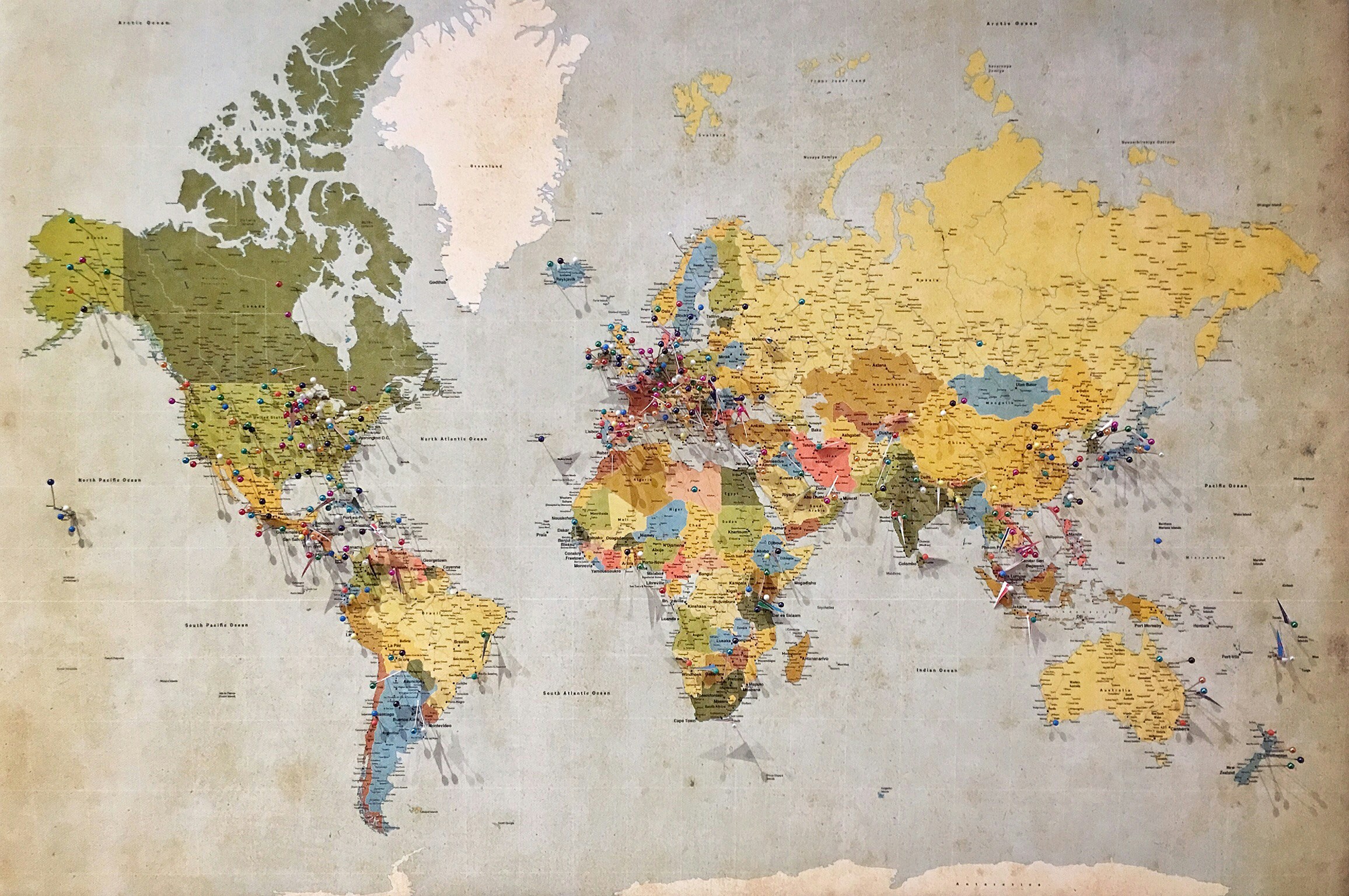
How Many Countries Are in the World? The Complete 195-Country Guide
How Many Countries Are in the World?
The world has 195 countries according to the commonly used international count. This figure consists of 193 United Nations (UN) member states and two non-member observer states: the Holy See and the State of Palestine.
However, you may sometimes see a different number when searching for the total number of countries in the world. This happens because countries and territories do not all have the same political status, and not every territory is recognised as an independent sovereign state by all governments.
If you want a straightforward answer, 195 is the standard figure used by many geographical and educational references. Understanding how this number is calculated will also help you distinguish countries from territories, dependencies and disputed states.
- How Many Countries Are There in the World?
- Why Do People Say There Are 195 Countries?
- How Many Countries Are in Each Continent?
- What Is the Difference Between a Country and a Territory?
- Why Do Some Sources Give a Different Number of Countries?
- Is Vatican City the Same as the Holy See?
- Has the Number of Countries in the World Always Been 195?
- What Makes a Place an Independent Country?
- Frequently Asked Questions
- Conclusion
How Many Countries Are There in the World?
There are 195 countries in the world under the commonly used counting method.
Here is how the number is calculated:
| Category | Number |
|---|---|
| United Nations member states | 193 |
| Non-member observer states | 2 |
| Total | 195 |
The United Nations currently has 193 member states. These countries participate as members of the organisation and have seats in its General Assembly.
The other two are the Holy See and the State of Palestine. They have non-member observer state status, meaning they can participate in certain United Nations proceedings without being full members.
This distinction is important because the figure of 195 does not mean that all 195 entities have exactly the same membership status within the United Nations.
For confirmation, the United Nations provides an official list of its 193 member states.
Why Do People Say There Are 195 Countries?
The figure of 195 comes from combining the 193 United Nations member states with the two non-member observer states.
The United Nations is one of the most widely recognized international organizations, making its membership a useful reference when discussing the number of countries in the world.
Although, membership is not the only factor involved in determining whether a place is considered a country. Political independence, sovereignty, international recognition and relationships with other states can also influence how an entity is classified.
Let’s look at the two categories that make up the commonly accepted total.
1. The 193 United Nations Member States
The United Nations was established in 1945 after the Second World War. Its primary purposes include maintaining international peace and security, encouraging cooperation among countries, protecting human rights and supporting development.
When the organization was founded, it had 51 member states. Its membership gradually increased as more countries gained independence or were admitted.
Today, it has 193 member states.
These countries come from every inhabited continent and include nations with different political systems, economies, cultures, languages and populations.
Some examples include:
- Nigeria
- Ghana
- South Africa
- United States
- United Kingdom
- Canada
- Brazil
- China
- India
- Japan
- Germany
- Australia
Nigeria is one of the 193 member states. It joined the United Nations on 7 October 1960, shortly after gaining independence.
Being a member means a country participates in the organisation’s activities and has representation in the General Assembly.
2. The Two United Nations Observer States
Apart from its 193 member states, the United Nations rates two non-member observer states.
They are:
The Holy See
The Holy See is the governing authority of the Catholic Church and maintains a permanent observer presence at the United Nations.
It is closely associated with Vatican City, the world’s smallest independent state by area and population.
Although the Holy See and Vatican City are closely connected, they are not identical terms. The Holy See represents the central governing authority of the Catholic Church, while Vatican City is the territorial state.
The State of Palestine
Palestine received non-member observer state status in the United Nations in November 2012 through General Assembly Resolution 67/19.
This status allows Palestine to participate in certain United Nations activities as an observer state, although it is not a full member of the establishment.
The distinction between observer status and full membership explains why Palestine is included in the commonly accepted count of 195 countries but is not among the 193 UN member states.
You can find further information about both observer states on the United Nations’ official non-member states page.
How Many Countries Are in Each Continent?
The 195 countries are distributed across the world’s continents.
The commonly used geographical breakdown is:
| Continent | Number of countries |
|---|---|
| Africa | 54 |
| Asia | 48 |
| Europe | 44 |
| North and South America combined | 35 |
| Oceania | 14 |
| Total | 195 |
These figures follow a commonly used classification of countries by continent. Geographical classifications can differ slightly, particularly for countries located between Europe and Asia.
Let’s look at each continent more closely.
1. Africa – 54 Countries
Africa has 54 countries, making it the continent with the highest number of countries.
It is also home to a wide range of cultures, languages, natural resources and geographical features.
Some African countries include:
- Nigeria
- Ghana
- Kenya
- South Africa
- Egypt
- Ethiopia
- Uganda
- Tanzania
- Morocco
- Senegal
- Rwanda
- Algeria
Nigeria is located in West Africa and is one of the continent’s most populous countries.
Africa is bordered by the Mediterranean Sea to the north, the Atlantic Ocean to the west and the Indian Ocean to the southeast. It also contains major geographical features such as the Sahara Desert, the Nile River and the Congo Basin.
2. Asia – 48 Countries
Asia has 48 countries under this commonly used classification.
It is the largest continent by land area and population. It contains some of the world’s most populous countries, including China and India.
Examples of Asian countries include:
- China
- India
- Japan
- South Korea
- Pakistan
- Bangladesh
- Indonesia
- Malaysia
- Singapore
- Saudi Arabia
- Thailand
- Vietnam
Asia is geographically and culturally diverse. It includes large deserts, mountain ranges, tropical forests, islands and densely populated cities.
The continent also plays a major role in global manufacturing, technology, agriculture, trade and international business.
3. Europe – 44 Countries
Europe has 44 countries under the commonly used geographical classification.
Although it is relatively small compared with Asia and Africa, Europe has played a major role in world history, politics, science, trade and industrial development.
Some European countries include:
- United Kingdom
- Germany
- France
- Italy
- Spain
- Portugal
- Netherlands
- Belgium
- Switzerland
- Sweden
- Norway
- Poland
Europe is known for its diverse cultures, historical landmarks, established transport networks and developed economies.
Some countries, such as Russia and Turkey, have territory in both Europe and Asia. Their geographical position is one reason country classifications can differ between references.
4. North and South America – 35 Countries
North and South America together have 35 countries in this classification.
The Americas contain countries with different climates, populations, languages, economies and cultural backgrounds.
Examples include:
North America:
- Canada
- United States
- Mexico
- Cuba
- Jamaica
- Haiti
- Panama
- Costa Rica
South America:
- Brazil
- Argentina
- Colombia
- Chile
- Peru
- Ecuador
- Venezuela
- Uruguay
The Americas extend from the Arctic region in the north to the southern parts of South America.
They contain major natural features such as the Amazon Rainforest, the Andes Mountains and the Rocky Mountains.
The continent also has important agricultural, industrial and natural resource sectors.
5. Oceania – 14 Countries
Oceania has 14 countries in this commonly used classification.
It includes Australia, New Zealand and several island nations across the Pacific Ocean.
Examples include:
- Australia
- New Zealand
- Fiji
- Papua New Guinea
- Samoa
- Tonga
- Vanuatu
- Kiribati
- Tuvalu
- Nauru
- Palau
- Marshall Islands
- Solomon Islands
- Federated States of Micronesia
Many countries in Oceania are made up of islands. Their geographical location makes them particularly connected to the Pacific Ocean.
Some also face environmental challenges, including rising sea levels, coastal erosion and extreme weather events.
What Is the Difference Between a Country and a Territory?
One reason people sometimes get confused about the number of countries in the world is that they mistake territories for independent countries.
A country is generally understood as a political entity with a defined territory, population, government and some degree of sovereignty.
A territory, on the other hand, may be a geographical area governed by another country or administered under a special political arrangement.
For example, Greenland is geographically large, but it is an autonomous territory within the Kingdom of Denmark. It is not counted as a separate sovereign country in the standard total of 195.
Similarly, Puerto Rico is a territory of the United States rather than an independent sovereign state.
Other examples of territories and special administrative areas include:
- Bermuda
- Guam
- Hong Kong
- Macau
- French Polynesia
- New Caledonia
These places have different political arrangements. Some enjoy considerable self-government, while others are administered more directly by another state.
However, they are not added to the commonly accepted count of 195 countries.
This is why it is important to understand the difference between a country’s geographical identity and its political status.
Why Do Some Sources Give a Different Number of Countries?
Although 195 is the commonly accepted figure, not every source uses the same counting method.
Some references count only the 193 United Nations member states. Others include additional territories or entities with disputed international recognition.
There are several reasons for these differences.
1. Disputed International Recognition
Some places operate with their own governments and institutions but do not have universal international recognition as independent countries.
Their political status may be disputed by other governments or affected by international disagreements.
Taiwan and Kosovo are two frequently discussed examples.
Taiwan operates with its own government and institutions, but its international political status is disputed, and it is not a United Nations member or observer state.
Kosovo declared independence from Serbia in 2008 and has been accepted by many countries, but Serbia and some other states do not approve it as an independent country.
Because recognition differs, some country lists include these places while others do not.
2. Different Definitions of a Country
There is no single worldwide list that every institution uses for every purpose.
Some lists focus on United Nations membership. Others consider sovereignty, diplomatic recognition, political independence or geographical administration.
For example, a travel website may include territories because travelers need information about entry requirements, currencies and local regulations.
A geography textbook may use the 195-country classification instead.
Both lists may serve different purposes, but they should not be confused.
3. Countries and Territories Have Different Political Statuses
A place can have its own flag, government, currency or immigration rules without being recorded as an independent sovereign country.
This is particularly common among territories that maintain special relationships with larger countries.
Therefore, the existence of separate institutions does not automatically mean a place should be counted as an independent country.
Is Vatican City the Same as the Holy See?
This is another question that often comes up when people research the number of countries in the world.
Vatican City and the Holy See are closely connected, but they are not exactly the same.
Vatican City is an independent sovereign city-state located within Rome, Italy. It is the smallest country in the world by both land area and population.
The Holy See is the central governing authority of the Catholic Church. It maintains diplomatic relationships with many countries and has non-member observer state status at the United Nations.
The Holy See is included in the commonly accepted total of 195 countries.
However, Vatican City is not counted as an additional country on top of the Holy See in this calculation.
This distinction helps prevent double-counting when researching the number of countries in the world.
Has the Number of Countries in the World Always Been 195?
No. The number of countries has changed significantly throughout modern history.
Political boundaries are not permanent. Countries can gain independence, merge, separate or experience changes in their international recognition.
When the United Nations was established in 1945, it had 51 founding member states.
Over the following decades, its membership increased as many territories gained independence, particularly during the period of decolonisation in Africa, Asia and other regions.
One important example is Nigeria.
Nigeria became independent from British colonial rule on 1 October 1960 and joined the United Nations six days later.
Another major development occurred in 2011, when South Sudan became an independent country after separating from Sudan. It joined the United Nations on 14 July 2011, becoming its 193rd member state.
Since South Sudan’s admission, the United Nations has continued to have 193 member states.
The commonly used total of 195 also includes the two non-member observer states.
This history shows why the number of countries can change over time as political developments occur.
What Makes a Place an Independent Country?
Determining whether a place qualifies as an independent country involves several important considerations.
Although political recognition can be complicated, some common characteristics help explain what makes a state independent.
1. Defined Territory
An independent country generally has a geographical area with recognised or identifiable boundaries.
These boundaries may be land borders, maritime boundaries or both.
However, some countries have territorial disputes with neighbouring states. Such disagreements do not automatically mean that they are not countries.
2. Permanent Population
A country generally has a population of people who live within its territory.
The size of the population does not determine whether a place qualifies as a country. Some countries have millions of residents, while others have very small populations.
3. Government
An independent country usually has a government responsible for managing its internal affairs.
This includes making laws, providing public services, maintaining security and managing national institutions.
Different countries have different forms of government, including presidential systems, parliamentary systems and constitutional monarchies.
4. Ability to Maintain International Relations
An independent state generally has the ability to establish diplomatic relationships and engage with other countries.
This may involve signing agreements, participating in international organisations, establishing embassies and conducting foreign relations.
These characteristics help explain the concept of statehood, although international recognition and political disputes can make individual cases complicated.
Frequently Asked Questions
1. How many countries are there in the world in 2026?
There are 195 countries under the commonly used international count in 2026. This includes 193 United Nations member states and two non-member observer states: the Holy See and Palestine.
2. How many countries are members of the United Nations?
The United Nations has 193 member states. Each member state has a seat in the General Assembly.
3. Which continent has the highest number of countries?
Africa has the highest number of countries, with 54 under the commonly used geographical classification.
4. Which is the smallest country in the world?
Vatican City is the smallest independent country in the world by both land area and population. It is located within Rome, Italy.
5. Which is the largest country in the world?
Russia is the largest country in the world by land area. It extends across Eastern Europe and northern Asia.
6. Is Taiwan counted among the 195 countries?
Taiwan is not included in the commonly used total of 195 countries because it is neither a United Nations member state nor a non-member observer state. Its international political status remains disputed.
7. Is Palestine one of the 195 countries?
Yes. Palestine is included in the commonly used total because it has non-member observer state status at the United Nations. It is not one of the 193 full UN member states.
8. Is Nigeria one of the 195 countries?
Yes. Nigeria is one of the 193 United Nations member states and is located in West Africa.
9. How many countries are in Africa?
Africa has 54 countries under the commonly used geographical classification.
10. Can the number of countries in the world change?
Yes. The number can change because of political developments, independence movements, state formation and changes in international recognition. However, changes in political status do not automatically result in admission to the United Nations.
Conclusion
The commonly accepted answer to the question of how many countries are in the world is 195. This total consists of 193 United Nations member states and two non-member observer states: the Holy See and the State of Palestine.
However, the number can appear different depending on whether a source counts only UN members, includes disputed states or lists dependent territories separately.
Understanding these distinctions makes it easier to interpret geographical information and avoid confusing independent countries with territories or regions that have special political arrangements.
For general educational and geographical purposes, 195 remains the standard answer.